How Seattle-Area Weather Damages Your Roof (And What to Do About It)
If you live on the Eastside, you already know the rain never really stops for long. Bellevue gets somewhere around 42 to 46 inches of rain a year, and November alone brings close to 7 inches spread across about three weeks of wet days. That kind of steady moisture, combined with the wind and shade that come with it, wears a roof down, not one big dramatic storm but months of small, ongoing exposure. This guide walks through what each season does to a roof in Bellevue, Kirkland, Redmond, Issaquah, Sammamish, Bothell, and Woodinville, and what you can do about it before it turns into a repair bill.
Fall: Setting the Stage for Winter Problems
Fall doesn't usually get blamed for roof damage, but it's where most winter problems actually start. As leaves and needles come down from the mature trees that cover a lot of Eastside lots, they collect in roof valleys and gutters right as rainfall is climbing toward its November peak. The leaves themselves aren't the real issue. It's what they cause. A clogged gutter can't move water off the roof, so it backs up under the edge of the roofline instead of draining away.
A quick way to check is to watch what happens during a normal rainfall. If water is spilling over the side of a gutter instead of moving through the downspout, that's a sign it's already blocked. This is also the easiest problem on this list to prevent, since it's usually solved with a straightforward gutter cleaning before the heavier winter rain arrives.
Winter: Rain Volume and Wind
Winter is where the two biggest local threats show up together: sustained rain and wind. November through December is when Bellevue sees its heaviest rainfall of the year, and weeks of near-constant moisture is hard on sealants, flashing, and anything already loosened or aging on the roof surface.
Wind is the other half of it. According to the City of Seattle's Office of Emergency Management, the region sees wind gusts of 40 to 50 mph at least once a year, with larger storms bringing 60 to 80 mph gusts roughly once a decade. Puget Sound has recorded sustained winds of 60 to 70 mph with gusts up to 90 mph in bigger events. The same source notes that structural damage can start at wind speeds as low as 32 mph, which is a lot lower than most homeowners assume.
After any windy night, it's worth a quick look from the ground for shingles that look lifted, curled, or missing altogether. If a hard freeze follows a stretch of clogged gutters, ice can also build up at the roof edge and make drainage worse, though this happens less often here than in colder climates. A roof cleaning appointment after a rough winter is a good way to catch small issues, like a lifted shingle or a section of moss holding water, before spring turns them into something bigger.
Spring: The Moss Growth Window
Spring is when moss really takes hold, and it's driven by something specific: shade, not just rain. According to research from Oregon State University's Extension Service, moss needs shade to grow, which means the fix isn't only cleaning it off, it's letting more light reach the roof. OSU's plant pathologist puts it plainly: you can clean all you want, but if the shade stays, the moss comes back.
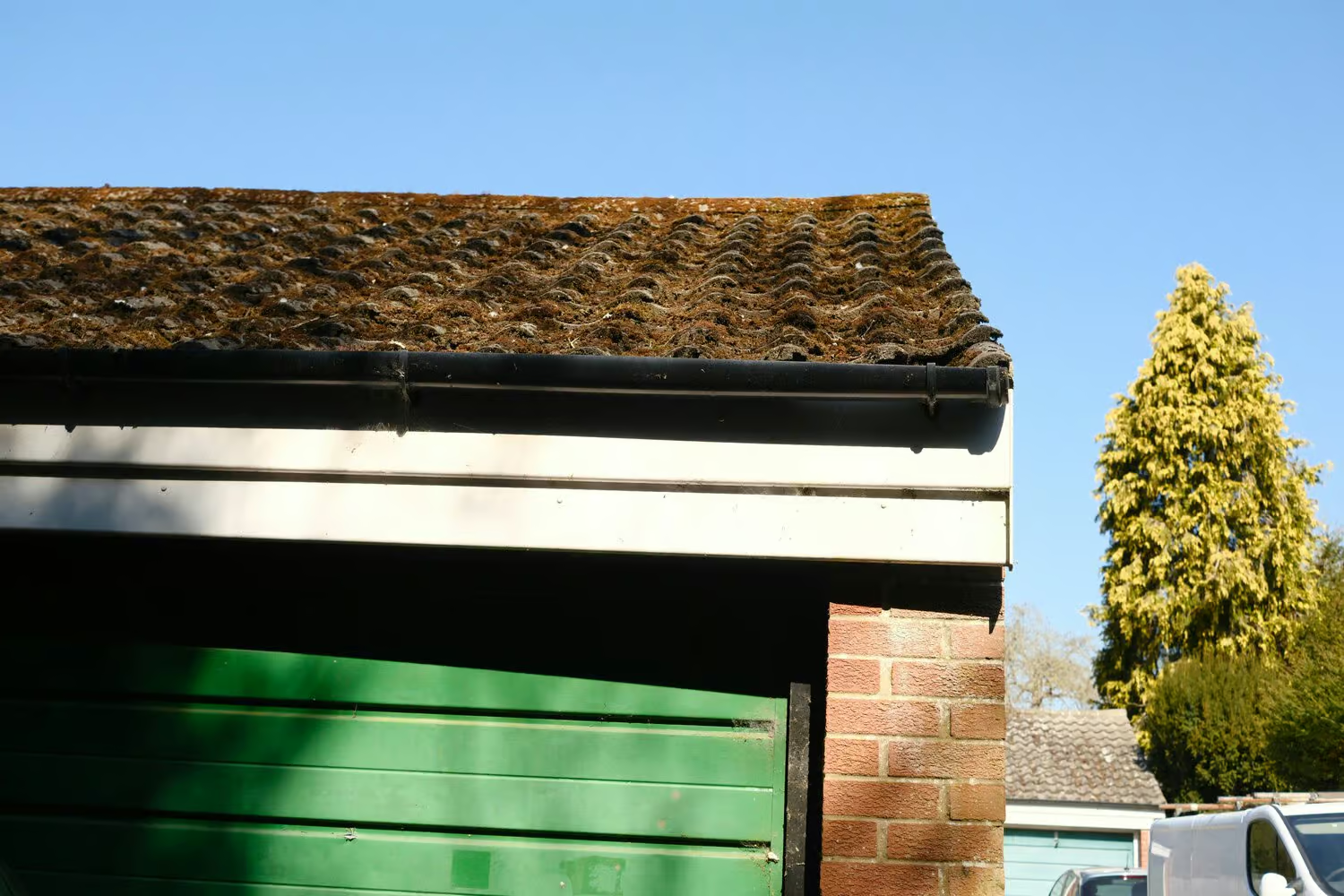
This is why moss tends to concentrate on north-facing roof slopes under tree cover, which describes a lot of homes on the Eastside. Moss traps moisture against the roof surface, and on older or wood shake roofs especially, that trapped moisture can contribute to breakdown over time. It's worth noting that even OSU's research is more cautious here than most industry blogs, moss growth itself isn't necessarily what destroys a roof, but the moisture it holds in place is a real and ongoing problem. Moss that breaks loose during a rain also tends to end up in gutters, which brings the drainage problem from fall right back into the picture.
Spring is a good time to combine moss removal with some strategic tree trimming if a shaded roof section is a recurring problem. We've written before about how healthy trees actually add value to a property, and the same trees that boost curb appeal can be trimmed back just enough to cut down on moss without losing that value.
Summer: The Maintenance Window
July is the driest month of the year in Bellevue by a wide margin, and that short dry stretch is less a break from roof problems than it is the best window to fix them. Trying to clean or treat a roof during a wet month isn't practical, so summer is when moss treatments have the best chance to work and stay effective.
It's also a good season to catch up on everything else that gets put off during the wetter months, a driveway washing to clear out winter grime and moss stains, and a full exterior cleaning to protect siding before the rain picks back up in fall. Think of summer less as a season with nothing to do and more as the head start on everything fall and winter are about to bring back.
A Simple Self-Check You Can Do From the Ground
You don't need to get on a ladder to catch most early warning signs. A few minutes with a pair of binoculars after a storm or a rainy week can tell you a lot:
- Overflowing gutters during a normal rain, which usually means a blockage further down the line.
- Green or dark patches on north-facing or shaded roof slopes, which is where moss shows up first.
- Shingles that look curled, lifted at the edge, or missing after a windy night.
- Sagging sections of gutter, which can point to trapped debris or water weight.
If you're only seeing one of these, it's usually fine to keep an eye on it. If you're seeing two or more, or if it's been more than a year since the roof was last looked at, it's worth having someone take a closer look before the next wet season arrives.
A Practical Year-Round Rhythm for Eastside Homes
None of this needs to be complicated. A simple seasonal rhythm covers almost everything:
- Fall: clear gutters and valleys before the November rain peak.
- Winter: check the roof after any major windstorm.
- Spring: treat moss and trim back shading branches.
- Summer: handle deeper cleaning and prevention while it's dry.
Homes that follow something close to this pattern tend to catch small problems while they're still small, which is a lot cheaper than dealing with a leak after the fact.
Protecting Your Roof, Season After Season
Most of the damage Seattle-area weather causes is preventable with the right maintenance at the right time of year. H&G Roof Cleaning and Exteriors works with homeowners across Bellevue, Bothell, Edmonds, Issaquah, Kenmore, Kirkland, Lynnwood, Mercer Island, Redmond, Sammamish, Shoreline, and Woodinville to stay ahead of exactly this cycle. If it's been a while since your roof or gutters had a look, request a free quote and we'll help you figure out where to start.